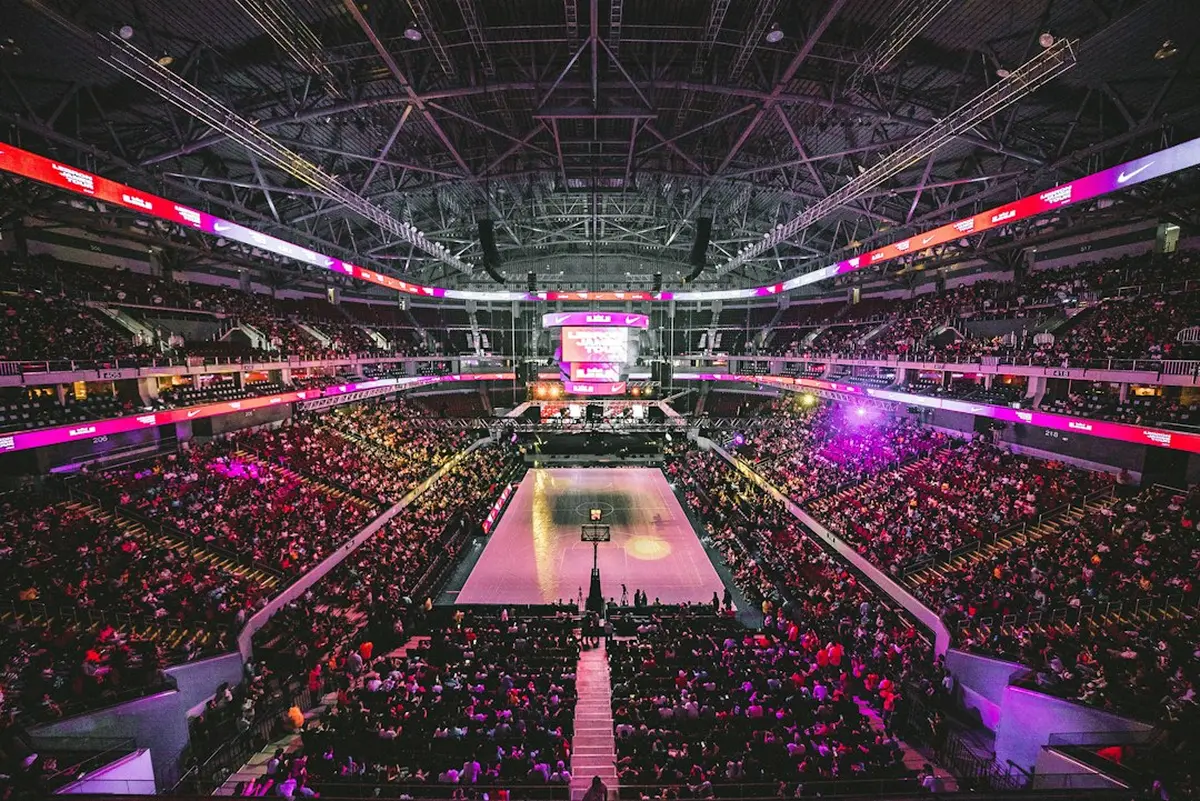
A best-of-five series is not one bet placed five times. Each result changes the price of every game after it, so a fixed peso budget belongs to the games still possible, not to Game 1. The San Miguel and Barangay Ginebra quarterfinal shows this clearly. Ginebra leads 2-0 after winning 104-95 and 126-99, so San Miguel now has to win three games in a row to survive.
The practical conclusion for a small-stakes bettor is simple. Split the series budget by the number of games that could be played, accept that some of it will never be spent, and treat the money left over as savings rather than a reason to bet more. The calendar adds one more reason. After this round the PBA stops from November 9 to December 3 for a FIBA window, and the semifinals do not start until December 4. The conference will last longer than most budgets assume.
How a series price moves
All four quarterfinals are first-to-three-wins series, and none of the higher seeds gets a twice-to-beat advantage, according to GMA News Online's pairings report. Every series starts at 0-0. A licensed sportsbook will usually offer two kinds of price: a moneyline on the next game and, often, a price on who wins the series.
The two behave very differently. A small edge in a single game grows over a series. A small deficit in a series grows faster still. Converting any decimal price is the same step every time: 1 divided by the price gives the implied probability, as covered in our explainer on converting a decimal price. The arithmetic below uses hypothetical per-game chances, since none of the sources lists actual odds.
What one game's edge becomes over five
Hypothetical: assume each game is independent and one team has the same chance of winning every game. The series probability for a best-of-five from 0-0 is p³ × (1 + 3q + 6q²), where q = 1 − p.
| Per-game chance 50%, series from 0-0 | 50% |
|---|---|
| Per-game chance 55%, series from 0-0 | about 59% |
| Trailing team at 0-2, per-game chance 50%, must win 3 straight | 12.5% |
| Trailing team at 0-2, per-game chance 40%, must win 3 straight | 6.4% |
| Fair decimal price for that 6.4% | about 15.6 |
A team that is a slight favorite in each game becomes a clearer favorite over the series. A team down 0-2 at even odds per game survives only one time in eight. A series price on San Miguel now should therefore be long, and a fair one would be much longer than any single-game moneyline on them.
Where it shows up this round
In Game 1, Ginebra built a lead of as much as 20 points, at 94-74, before holding off a late San Miguel run. GMA News Online reported that Jordan Murphy had 29 points, 11 rebounds and 4 blocks. San Miguel import George King scored 20, below his 33.67 regular-season average, and June Mar Fajardo scored 3 points in 36 minutes. Game 2 was a 126-99 win, which Philstar says left Ginebra one win from a sweep. That kind of performance moves the next price. Whether it moves it too far is the open question.
The other series show the same pattern. NLEX swept Phoenix 3-0, and TNT, the Group A No. 4 seed, swept Magnolia, the Group B No. 1 seed, 3-0. Seeding did not decide that one, a point Magnolia's LA Tenorio seemed to expect when he called the quarterfinals "the hardest part." Rain or Shine and Converge are tied 1-1. Rain or Shine came back from 21 points down to win Game 1, 124-120, and Converge won Game 2, 130-125. In a 1-1 series the price stays close to the per-game odds. At 2-0 it does not.
Not the same as a single-game moneyline
| Next-game moneyline | Series price | |
|---|---|---|
| What it settles on | One game's winner | First team to three wins |
| How long the money is tied up | One night | Up to five games, possibly across a schedule change |
| What a 2-0 lead does to it | Moves it somewhat | Moves it a lot, as the arithmetic above shows |
| Risk of mistaking it | Treating one blowout as a trend | Paying a short price for an outcome the series state already makes likely |
Pacing a peso budget across five games
Suppose a reader sets aside ₱1,500 for this series before Game 1. Dividing by the five possible games gives ₱300 per game. That money is spent only if the game is played. At a hypothetical Game 3 price of 2.50 on San Miguel, which implies 40%, a ₱300 stake returns ₱750 in total if San Miguel wins. If Ginebra closes the series on November 3, the ₱600 set aside for Games 4 and 5 stays unspent and goes back to the household budget. It should not be moved to the Rain or Shine and Converge series.
The strongest objection is that two of the four series ended in three games, so planning for five looks like overcaution. That is a fair point. A per-game cap does mean a typical series spends less than its allowance. That is the purpose of the cap. A bettor who puts the full ₱1,500 on Game 1 has bet on one game while thinking about the whole series. The bettor who keeps the cap never has to decide, at 0-2, whether to double up.
The break that stretches the budget
The Philippine Star calendar sets the quarterfinals from October 25 to November 8, a FIBA break from November 9 to December 3, best-of-five semifinals from December 4 to 13, and best-of-seven Finals from December 16 to 30. Game 3 of San Miguel and Ginebra is set for November 3 at Dasmariñas Arena, with a possible Game 4 on November 6 at Araneta. The Wikipedia listing shows a possible Game 5 on November 10, which is during the published break. The sources do not agree on this, so check the league schedule before setting aside money for that date. Our plan for the Gilas break explains how to carry a conference budget across the gap without spending it early.
What changes now
Before betting any quarterfinal game, check the series score, convert both the game price and the series price to implied probabilities, and compare them with what three straight wins would actually require. Then stake no more than one-fifth of the series budget. If the series ends early, keep the rest for December or don't spend it at all. The semifinals and Finals could add up to twelve more games.
Comments
No comments yet. Be the first to comment!
Leave a Comment